National Steel Policy
India's Roadmap for the Steel Sector
A National Steel Policy is a long-term plan made by the Government of India for the steel industry. It sets targets for how much steel India should be able to make and use, and lists the steps to get there: raw materials, technology, finance, demand and the environment. It does not run steel plants itself. It shows the direction in which the whole industry should move.
Why does India need a steel policy?
Steel is the backbone of a growing economy. Roads, bridges, railways, buildings, cars, ships, machines and defence equipment all need it. A country that is building fast, like India, needs much more steel every year. Steel plants are also very costly and take 4 to 5 years to build. So companies need a clear, long-term signal from the government about demand, raw materials and rules before they invest thousands of crores.
Where did it come from?
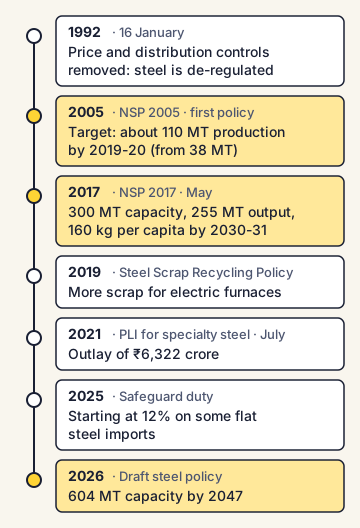
For decades after Independence, the government controlled steel closely. It decided who could set up plants and even fixed steel prices. This changed with the 1991 economic reforms. Price and distribution controls on iron and steel were removed on 16 January 1992. Since then, steel is a de-regulated sector: prices are set by the market. The government's role is that of a facilitator. It makes policy and creates a good environment for the industry, but it does not command it.
The policies so far
- National Steel Policy 2005: India's first such policy. It aimed to raise production from 38 million tonnes (2004-05) to about 110 million tonnes by 2019-20. India crossed this level early; crude steel output was about 109 million tonnes in 2019-20.
- National Steel Policy 2017 (NSP 2017): Approved by the Union Cabinet in May 2017. It set targets for 2030-31: 300 million tonnes of capacity, about 255 million tonnes of production, and per capita consumption of finished steel of about 160 kg (from about 61 kg then).
- Draft policy (2026): Sets a target year of 2047 (the 100th year of Independence): 604 million tonnes of capacity, with strong focus on raw-material security and lower emissions.
How is steel made? (The basics you need)
Steel is made by first taking the oxygen out of iron ore to get iron, and then refining that iron into steel. There are three main routes in India:
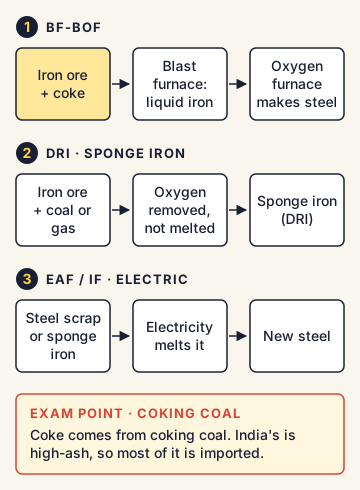
- Blast Furnace-Basic Oxygen Furnace (BF-BOF): Iron ore is melted in a tall blast furnace with coke (made from coking coal). The coke both heats the furnace and removes oxygen from the ore. The liquid iron is then turned into steel in an oxygen furnace. Big integrated plants like those of SAIL and Tata Steel use this route.
- Direct Reduced Iron (DRI), also called sponge iron: Oxygen is removed from iron ore without melting it, using coal or natural gas. India is a very large producer of sponge iron, mostly coal-based.
- Electric Arc Furnace (EAF) and Induction Furnace (IF): Electricity is used to melt steel scrap or sponge iron into new steel.
India's position as of 2025-26
- India is the world's second-largest producer of crude steel, after China. In 2025, China made about 961 million tonnes and India about 165 million tonnes (World Steel Association, provisional).
- India's crude steel capacity was 220.4 million tonnes in 2025-26, and crude steel production was about 170 million tonnes, the best year so far.
- India's per capita finished steel consumption was about 116 kg in 2025-26, while the world average was about 209 kg in 2025. China's is about 562 kg. This gap shows how much room India still has to grow.
The raw material challenge
Making one tonne of steel through the blast furnace route needs about 1.5 to 1.6 tonnes of iron ore and close to a tonne of coking coal [Unverified]. India has large reserves of iron ore (mainly in Odisha, Jharkhand, Chhattisgarh, Karnataka and Goa). But Indian coking coal is of poor quality: it has a high ash content.
So India imports most of the coking coal its steel plants need, about 51 to 58 million tonnes a year in recent years. Australia has long been the biggest supplier, though Russia and the US have gained share. The Ministry of Coal's Mission Coking Coal aims to raise domestic raw coking coal output to 140 million tonnes by 2029-30.
Other key government steps for steel
- Policy for Domestically Manufactured Iron & Steel Products (DMI&SP), 2017: Gives preference to Indian-made steel in government purchases. It was notified on 8 May 2017 and revised in 2019 and 2020.
- Steel Scrap Recycling Policy, 2019: Aims to improve the supply of scrap to electric furnaces through organised scrapping centres, linked with vehicle scrapping rules.
- PLI Scheme for Specialty Steel: Approved in July 2021 with an outlay of ₹6,322 crore. It gives incentives for high-value steel (coated steel, alloy steel, electrical steel). Specialty steel output is expected to reach about 42 million tonnes by the end of 2026-27.
- Safeguard duty: In 2025, India put a temporary safeguard duty (starting at 12%) on certain flat steel imports after a sudden rise in cheap imports hurt Indian makers.
Commonly confused concepts
- Capacity vs production vs consumption: Capacity is how much all plants can make in a year. Production is how much they actually made. Consumption is how much steel was used in the country (production plus imports minus exports).
- Crude steel vs finished steel: Crude steel is the first solid steel coming out of the furnace. Finished steel is what is made from it after rolling and shaping (bars, sheets, pipes). Policy targets for capacity use crude steel; per capita use is measured in finished steel.
- Coking coal vs thermal coal: Coking coal is used to make coke for steel. Thermal (non-coking) coal is burned in power plants to make electricity. India has plenty of thermal coal but little good coking coal.
- National Steel Policy vs Green Steel Taxonomy: The policy is the overall growth roadmap. The taxonomy (2024) is only a rating system that defines which steel counts as "green".
Issues, criticism and the way forward
- Raw material dependence: Heavy imports of coking coal make Indian steel costly when world prices rise, and expose it to supply shocks. The draft's plan to buy mines abroad is meant to reduce this risk.
- Growth vs emissions: Steel is one of India's most polluting industries. Tripling capacity while also cutting emissions per tonne needs huge investment in new technology.
- Cheap imports: Surges of low-priced steel from other countries can hurt Indian plants, especially small ones. Trade remedies like safeguard duties help producers but raise costs for steel users like auto and construction firms.
- Land, water and forest clearances: New plants and mines need large areas, often in tribal and forest regions, which creates social and environmental concerns.
- Way forward: Experts point to more scrap recycling, better beneficiation (cleaning and upgrading) of low-grade ore and coal, green hydrogen, and steady demand from infrastructure and housing.
Concepts to Know
- Crude steel: The first form of steel made in the furnace, before it is shaped into products.
- Per capita consumption: Total steel used in a year divided by the population. It is often used to compare how developed a country's infrastructure is.
- Coke: A hard, almost pure carbon fuel made by heating coking coal without air. It is the key input of a blast furnace.
- Beneficiation: Processing low-grade ore or coal to remove waste and raise its quality.
- Safeguard duty: A temporary import tax allowed under World Trade Organization rules when a sudden rise in imports seriously harms domestic industry.
- PLI (Production Linked Incentive): A scheme where the government pays companies a reward linked to how much more they produce in India.
- Steel price and distribution controls removed: 16 January 1992; steel is a de-regulated sector
- NSP 2005: production target about 110 MT by 2019-20 (from 38 MT in 2004-05)
- NSP 2017: 300 MT capacity, 255 MT production, per capita consumption about 160 kg by 2030-31
- Draft policy 2026: 604 MT capacity by 2047; emission intensity from 2.54 to 1.54 tCO2 per tonne of crude steel
- India's crude steel capacity: 220.4 MT (2025-26); crude steel production about 170 MT (2025-26)
- India: 2nd largest crude steel producer (after China)
- Per capita finished steel consumption: India about 116 kg (2025-26); world about 209 kg (2025)
- PLI for Specialty Steel: ₹6,322 crore, approved July 2021
- Mission Coking Coal: 140 MT domestic raw coking coal by 2029-30
● Tracked since October 11, 2026 · last seen October 11, 2026 · updates as the daily brief publishes