Hydrogen Blending in Natural Gas
Mixing Hydrogen into City Gas Pipelines
Hydrogen blending means mixing a small amount of hydrogen gas into natural gas and sending the mixture through the existing gas pipes. Homes, hotels and factories then burn this mix just as they burn normal gas. Because hydrogen produces only water when it burns, and no carbon dioxide (CO2), the mix releases a little less CO2 than pure natural gas. It is one of the simplest first steps for countries that want to start using hydrogen without building a whole new pipeline network.
Why do countries blend hydrogen?
Natural gas is mostly methane, a fossil fuel. When it burns, it releases CO2, the main gas behind climate change. Hydrogen made with clean electricity (green hydrogen) burns with no CO2. But building separate pipelines only for hydrogen is very costly and slow. Blending lets countries use pipes that already exist. It also creates a steady, guaranteed buyer for the new hydrogen industry, which helps hydrogen producers grow.
Think of it like adding a little ethanol to petrol: the vehicle does not change, but part of the fuel becomes cleaner.
How does it work, step by step?
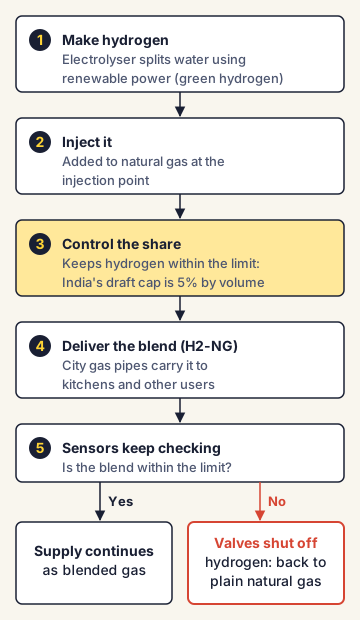
- Hydrogen is produced, ideally by splitting water with renewable electricity in a machine called an electrolyser.
- It is injected into the gas network at an injection point, where it mixes with natural gas.
- A control system measures how much hydrogen is in the mix and adjusts the flow, so the share stays within the approved limit.
- The blended gas, called H2-NG or HNG, flows through the city gas pipes to kitchens and other users.
- Sensors keep checking the blend. If something goes wrong, valves shut off the hydrogen and the network goes back to plain natural gas.
Why only a small percentage?
Hydrogen is very different from methane:
- Lower energy per volume: One cubic metre of hydrogen carries only about one-third of the energy of the same volume of methane. So a 5% blend by volume cuts CO2 by much less than 5%, roughly 1.5% to 2%. To deliver the same heat, more gas must flow.
- Flame behaviour: Hydrogen burns faster and hotter. Old cooking stoves and burners are designed for natural gas. Too much hydrogen can cause the flame to "flash back" into the burner or change its shape. Small blends keep the gas quality within the range appliances can safely handle. Engineers measure this with the Wobbe Index, a number that tells how much heat a gas gives through a burner.
- Leaks: Hydrogen molecules are the smallest of all, so the gas escapes more easily through tiny gaps in joints and seals.
- Hydrogen embrittlement: Hydrogen can enter some steels and make them brittle, so they crack more easily. This risk is higher in high-strength steel and high-pressure pipelines. Low-pressure city distribution pipes, often made of plastic (polyethylene) or lower-strength steel, face much lower risk. That is why blending usually starts in city distribution networks, not in big transmission pipelines.
Global experience
International trials suggest that blends of up to about 20% by volume can work in many networks with limited changes. The best-known example is the HyDeploy trial in the UK. At Keele University, hydrogen was blended up to 20% into the campus gas network for about a year (2019 to 2021). Users noticed no change in their appliances. Countries such as Germany, Australia and the United States have also run blending projects.
India's journey
India started with small, carefully watched pilots, each needing PNGRB clearance:
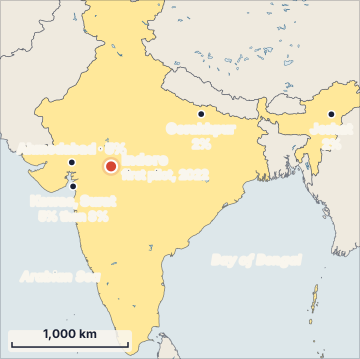
- GAIL, Indore (Madhya Pradesh): 2% blending cleared in June 2021; it began in January 2022 as India's first hydrogen-blending project in a city gas network. PNGRB lists it as completed with no adverse reports. A 5% pilot by Avantika Gas in Indore was cleared in October 2022.
- NTPC and Gujarat Gas, Kawas township (Surat, Gujarat): green hydrogen from a floating solar plant is blended into the township's PNG supply for household cooking. It started at 5%, and PNGRB has reported that it was later raised to 8%.
- Assam Gas Company, Jorhat (Assam): 2% blending, cleared March 2023.
- Adani Total Gas, Ahmedabad (Gujarat): 5% blending, cleared May 2024.
- Torrent Gas, Gorakhpur (Uttar Pradesh): 2% blending, cleared November 2024.
PNGRB, with the World Bank, has also studied how India's gas pipelines could carry hydrogen and has drawn up roadmap milestones up to 2040. One gap it noted: the PNGRB Act, 2006 was written for petroleum and natural gas and has no clear provision for hydrogen in pipelines, so rules and possibly the law need updating.
India's position
Blending fits into the National Green Hydrogen Mission (2023), which aims to create demand for green hydrogen inside the country. City gas networks are expanding fast, so they can become a large future buyer. India's approach is cautious: start small, in limited areas, with strong monitoring, and raise the share only after evidence shows it is safe.
Commonly confused concepts
- Hydrogen blending vs pure hydrogen pipelines: Blending sends a small share of hydrogen mixed with natural gas through existing pipes. Pure hydrogen pipelines carry 100% hydrogen and usually need new or heavily modified pipes.
- Blending by volume vs by energy: "5% hydrogen" normally means 5% by volume. Because hydrogen has less energy per volume, its share of the energy (and CO2 saving) is much smaller.
- Hydrogen blending vs CBG blending: Compressed Biogas (CBG) is mostly methane made from waste, chemically almost the same as natural gas. So CBG can be mixed in without the safety limits that hydrogen needs.
- PNG vs CNG vs LPG: PNG (piped natural gas) comes to homes through pipes. CNG (compressed natural gas) is natural gas squeezed into cylinders, mainly for vehicles. LPG (liquefied petroleum gas) is a different fuel (propane and butane) sold in cylinders. The PNGRB draft covers only domestic PNG.
- Green vs grey hydrogen: Green hydrogen comes from water using renewable electricity. Grey hydrogen comes from natural gas and releases a lot of CO2. Blending grey hydrogen brings little climate benefit; the climate case depends on using green hydrogen.
Issues, criticism and the way forward
- Small climate gain: Critics point out that a 5% blend cuts CO2 by only about 1.5% to 2%. Some experts argue that scarce green hydrogen would cut more emissions if used in steel, fertiliser or refineries, where it replaces grey hydrogen directly.
- Cost: Green hydrogen is still much costlier than natural gas. Who bears the extra cost (consumers, gas companies or the government) is not yet settled.
- Safety and appliances: Old stoves, meters and pipe fittings must be checked. Leak detection and consumer awareness are essential in homes.
- Measurement and billing: Because blended gas has less energy per cubic metre, billing by volume alone may be unfair to consumers; billing by energy content may be needed.
- Regulatory gaps: Clear national standards and changes to the PNGRB Act are needed for hydrogen in pipelines.
- Way forward: Expand pilots step by step, publish safety data, set common standards for appliances and pipes, decide on energy-based billing, and link blending to green (not grey) hydrogen.
Concepts to Know
- Natural gas: A fossil fuel found underground, made mostly of methane. It is used for cooking, power, fertilisers and vehicles.
- Electrolyser: A machine that uses electricity to split water (H2O) into hydrogen and oxygen.
- Injection point: The place in a gas network where hydrogen is added to the natural gas.
- Setpoint: The target level that a control system tries to keep. Here, the normal hydrogen share, kept below the 5% ceiling.
- Wobbe Index: A number showing how much heat a gas delivers through a burner. Gases with similar Wobbe Index values can be swapped in the same appliance safely.
- Hydrogen embrittlement: When hydrogen enters metal and makes it weak and brittle, so it can crack.
- City Gas Distribution (CGD): The local network of pipes that supplies PNG to homes and businesses and CNG to vehicles in a city or district.
- PNGRB draft (October 2026): maximum 5.0% hydrogen by volume in domestic PNG; 5% is a ceiling, not a routine target
- Continuous monitoring and automatic shut-offs required; initial rollout in small single-injection-point areas with PNGRB approval
- Excluded: CNG, transmission pipelines, pure hydrogen, refuelling, non-domestic PNG
- Pilots: Indore (GAIL 2%, cleared June 2021; Avantika Gas 5%, cleared October 2022), Kawas (5%, later 8%), Jorhat (2%), Ahmedabad (5%), Gorakhpur (2%)
- Hydrogen carries about one-third of methane's energy per unit volume
- UK HyDeploy trial at Keele University: up to 20% blend
- Blends up to about 20% are being tested internationally with limited impact on infrastructure
● Tracked since October 13, 2026 · last seen October 13, 2026 · updates as the daily brief publishes